Step 7 · Leave room for walking
Reading the Granite City
Why Aberdeen looks the way it does, and the buildings to look out for on a walk through the centre.
Why is Aberdeen called the Granite City?
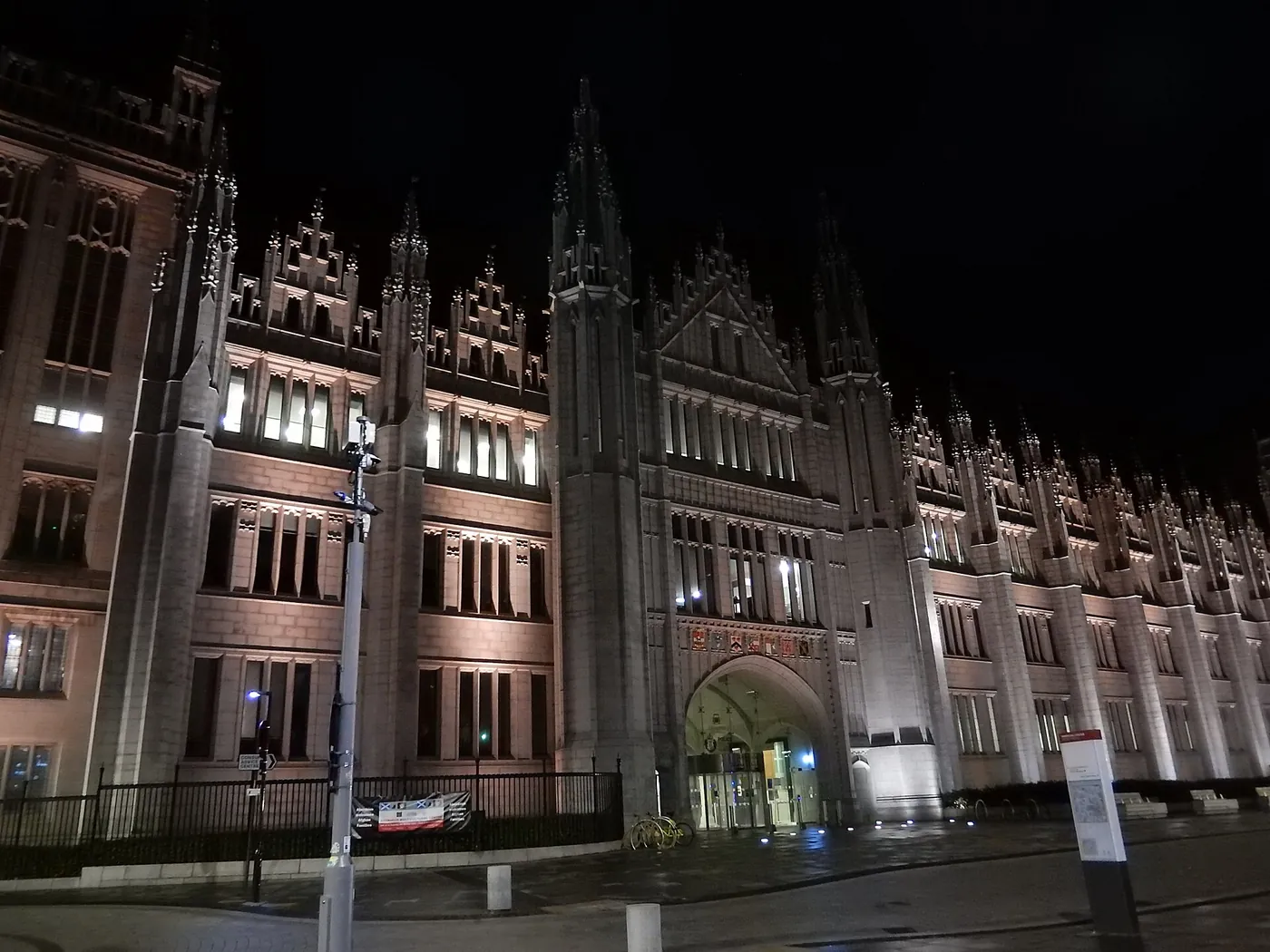
For centuries Aberdeen was built from the hard grey granite quarried around the city, most famously at the vast Rubislaw quarry in the west of the city, which was worked until 1971. Granite is difficult to carve but extremely durable, and it gives the city its unified look: long terraces of dressed grey stone, crisp edges and very little ornament. When sunlight catches the mica in the stone, the buildings sparkle — which is why the city is also called the Silver City.
Five buildings to look for
- Marischal College: on Broad Street, its soaring Gothic Revival front, completed in the early twentieth century, is one of the largest granite buildings in the world. It now houses the city council.
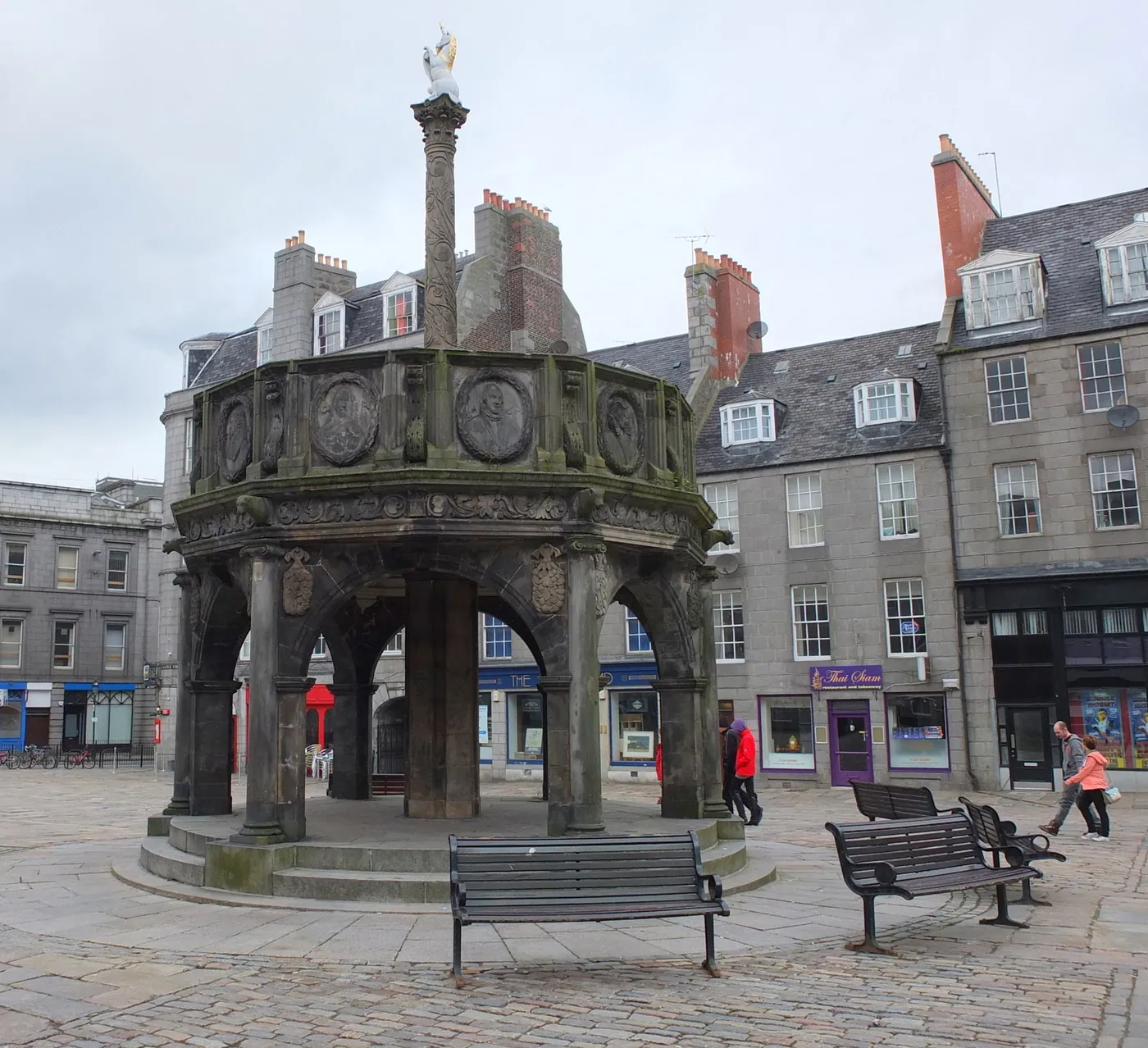
- The Mercat Cross: in the Castlegate, an ornate seventeenth-century market cross carved with royal portrait medallions.
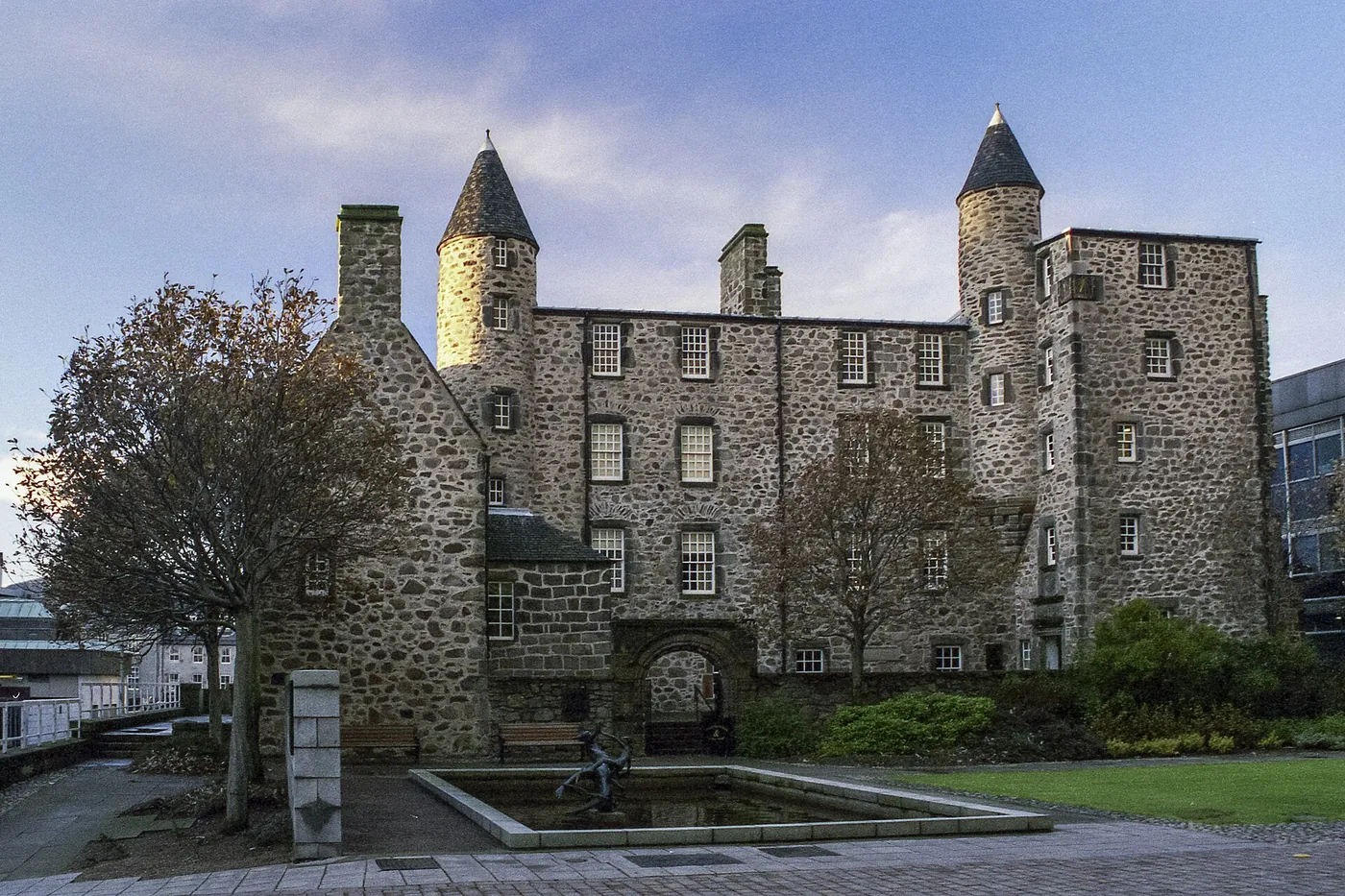
- Provost Skene's House: a sixteenth-century townhouse tucked behind Marischal College, now a museum about the city's people.
- The Music Hall: on Union Street, with the giant portico designed by Archibald Simpson.
- His Majesty's Theatre: Frank Matcham's Edwardian theatre with its green dome on Rosemount Viaduct.
The architects who shaped the city
Much of the centre was laid out in the early nineteenth century, when Union Street was driven west over a bridge across the Denburn valley. Two local architects, Archibald Simpson and John Smith, designed many of the major public buildings of that era, and later architects such as Alexander Marshall Mackenzie continued the tradition into the twentieth century. Their work gives the centre its consistent, formal character.
A self-guided granite walk
- Start at the Castlegate, with the Mercat Cross and the Town House towers.
- Walk up Broad Street to see the full height of Marischal College, then find Provost Skene's House behind it.
- Return to Union Street and walk west, looking up at the facades above the shopfronts.
- Pause on Union Bridge and the Union Terrace viewpoint to see the gardens, the theatre and the library together.
- Finish in the West End among the granite villas around Queen's Cross.
The walk takes around ninety minutes at an easy pace. In recent years the city has also gained a collection of large street-art murals on gable ends and lanes, which add colour to the grey stone — look out for them as you go.